

嘗試修改專案為平行化測試
修改專案後位置 https://github.com/x213212/andersen 上次課堂作業 /2020/11/simple-llvm-pass-analysis.html 分析的專案 https://github.com/grievejia/andersen 在尋找可以開啟修改為平行化的地方,雖然後面改完了但是發現一個大bug
主要想法是
https://github.com/grievejia/andersen/blob/master/include/Andersen.h
在這個地方
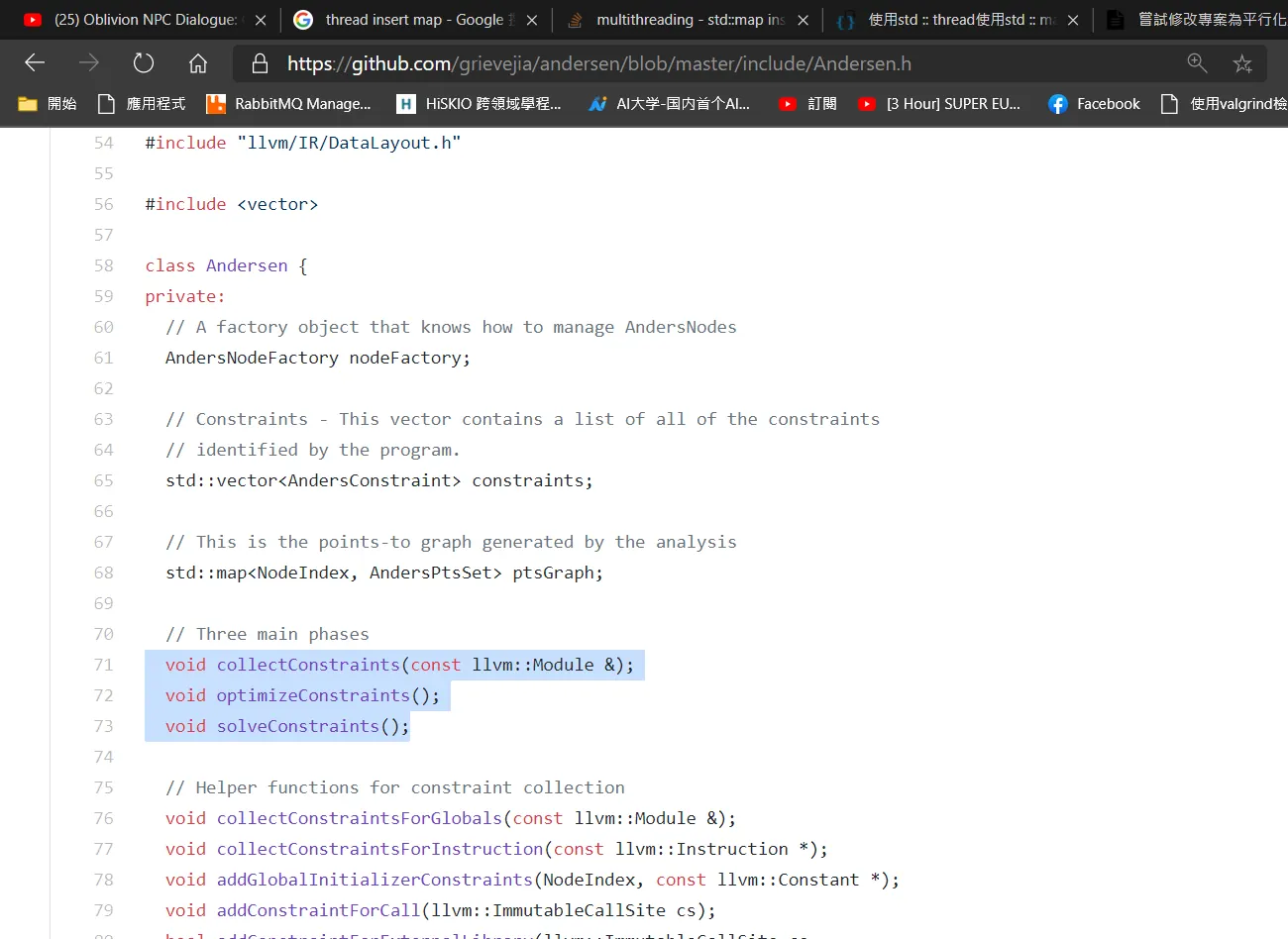 去尋找程式進入點那我選擇的是 collectConstraints 這個地方
https://github.com/grievejia/andersen/blob/ec036a43ac7bc3523cf50d43ad711c095c5f1112/lib/ConstraintCollect.cpp
可以看到
去尋找程式進入點那我選擇的是 collectConstraints 這個地方
https://github.com/grievejia/andersen/blob/ec036a43ac7bc3523cf50d43ad711c095c5f1112/lib/ConstraintCollect.cpp
可以看到
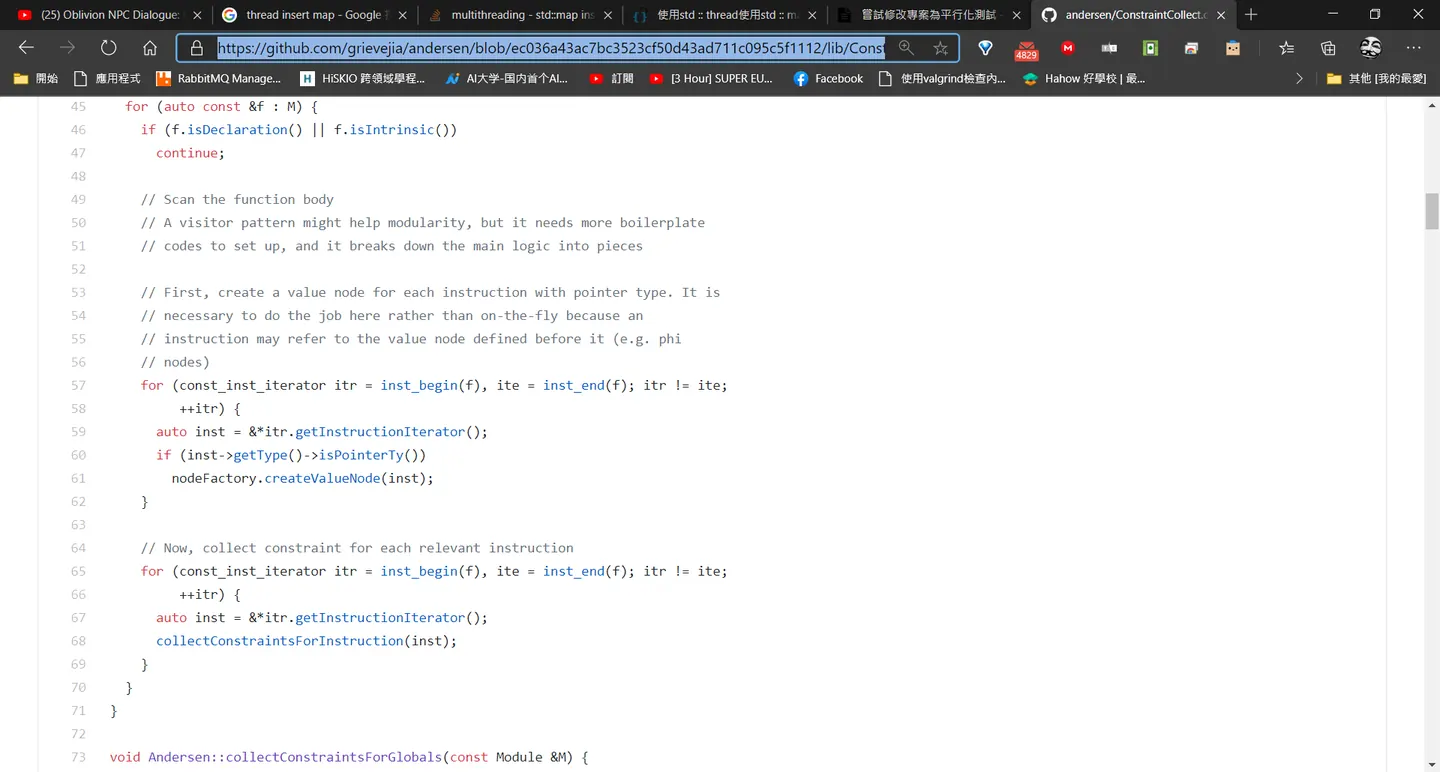
  // Here is a notable point before we proceed:
  // For functions with non-local linkage type, theoretically we should not
  // trust anything that get passed to it or get returned by it. However,
  // precision will be seriously hurt if we do that because if we do not run a
  // -internalize pass before the -anders pass, almost every function is marked
  // external. We'll just assume that even external linkage will not ruin the
  // analysis result first

  for (auto const &f : M) {
    if (f.isDeclaration() || f.isIntrinsic())
      continue;

    // Scan the function body
    // A visitor pattern might help modularity, but it needs more boilerplate
    // codes to set up, and it breaks down the main logic into pieces

    // First, create a value node for each instruction with pointer type. It is
    // necessary to do the job here rather than on-the-fly because an
    // instruction may refer to the value node defined before it (e.g. phi
    // nodes)
    for (const_inst_iterator itr = inst_begin(f), ite = inst_end(f); itr != ite;
         ++itr) {
      auto inst = &*itr.getInstructionIterator();
      if (inst->getType()->isPointerTy())
        nodeFactory.createValueNode(inst);
    }

    // Now, collect constraint for each relevant instruction
    for (const_inst_iterator itr = inst_begin(f), ite = inst_end(f); itr != ite;
         ++itr) {
      auto inst = &*itr.getInstructionIterator();
      collectConstraintsForInstruction(inst);
    }
  }
意味者我們可以在最後一個 function
collectConstraintsForInstruction
找到我們的蒐集相關約束的程式碼 也就是
https://github.com/grievejia/andersen/blob/ec036a43ac7bc3523cf50d43ad711c095c5f1112/lib/ConstraintCollect.cpp
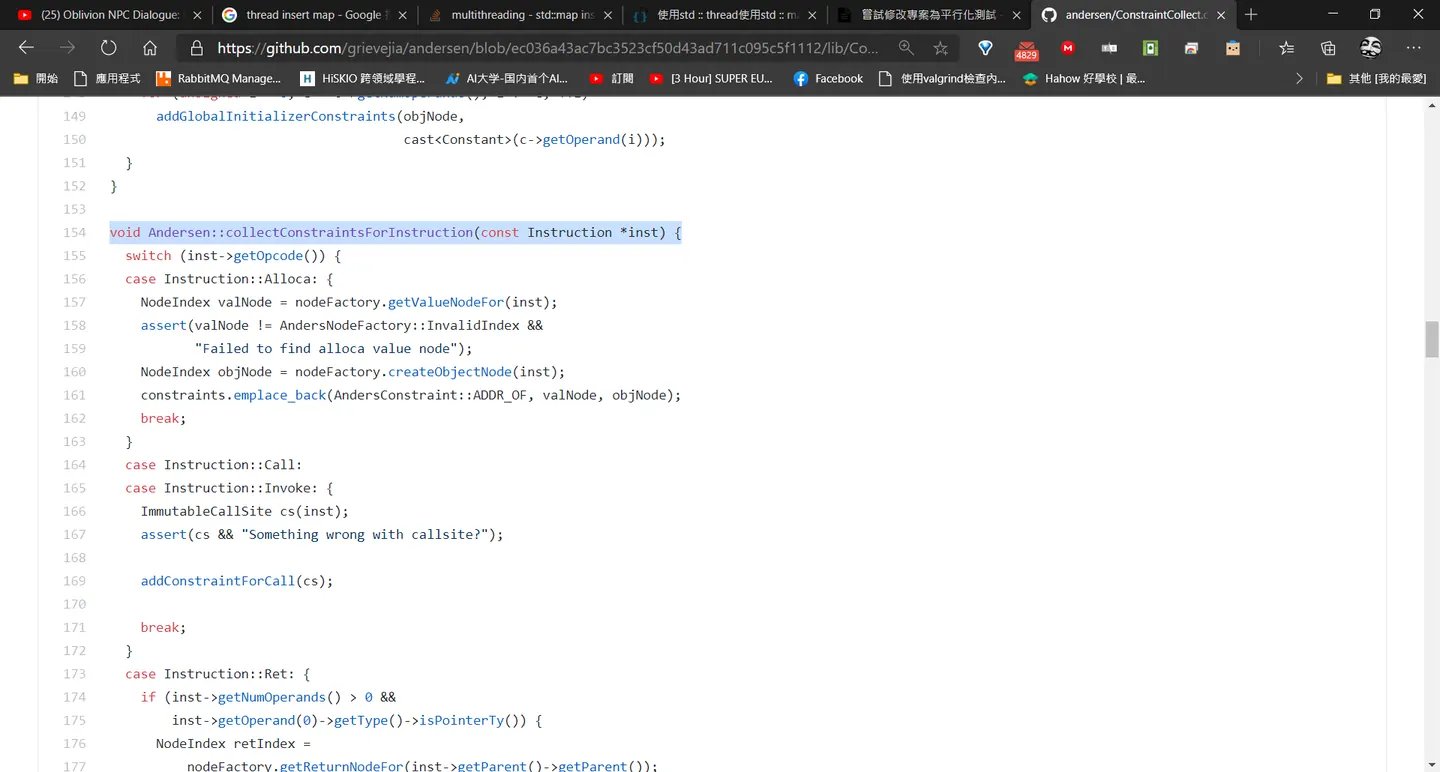 可以看到
可以看到
switch (inst->getOpcode()) { case Instruction::Alloca: {
這是原來的分析方式,程式流程 每一個 stmt 走 switch case 應該會是這樣
 應該是這樣子的走法,我想假設我在這邊引用thread pool 會發生什麼事
我隨便找了一個 thread pool 就直接改了
https://github.com/AngryHacker/articles/issues/1#issue-369867252
那麼合體後可能
應該是這樣子的走法,我想假設我在這邊引用thread pool 會發生什麼事
我隨便找了一個 thread pool 就直接改了
https://github.com/AngryHacker/articles/issues/1#issue-369867252
那麼合體後可能
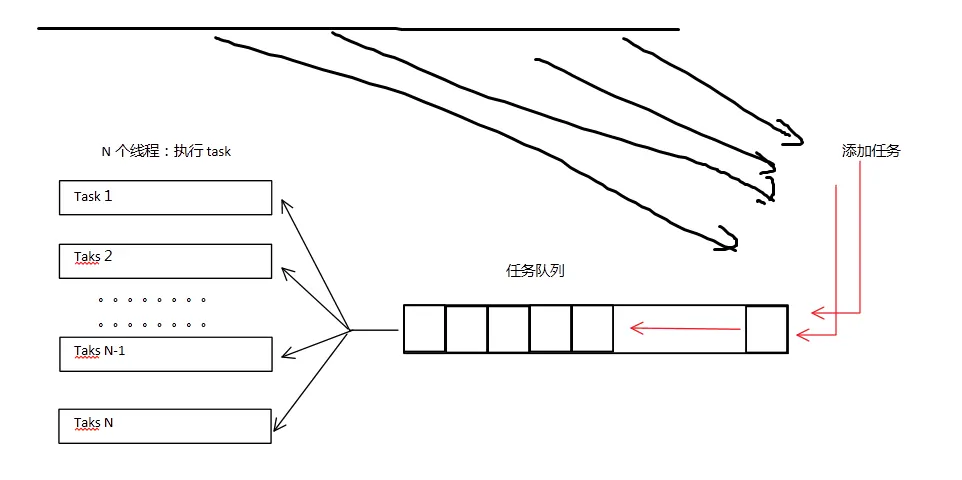 程式流程會變成這樣
可以看到原本的 function 裡面有這些東西
代表 可能nodeFactory 可能有順序上關係,那我們要找方法迴避一下
程式流程會變成這樣
可以看到原本的 function 裡面有這些東西
代表 可能nodeFactory 可能有順序上關係,那我們要找方法迴避一下
NodeIndex valNode = nodeFactory.getValueNodeFor(inst);
下面有用到一些作弊 和 function 指標的方式算是紀錄一下 我打算 在每一個 task 其實只是單存 插入 以 inst 當 key 和 fptr 當 value
typedef void (Andersen::fptr)(const llvm::Instruction ); map
mymap2;
那麼我就可以在 任務佇列任務出來的時候看當時設定的幾個 thread 來決定處理幾個
我額外用一個
Andersen *thistmp;
再void Andersen::collectConstraints(const Module &M)
裡面去 指向自己
thistmp = this;
這樣方便我們在 task 指定的時候 防止抓不到 我們自己的 function
主要是Andersen function 定義在外面 所以用了指標,絕對不是炫技xd
那麼簡單說一下技巧可能 在 cmake 的時候 仔細看
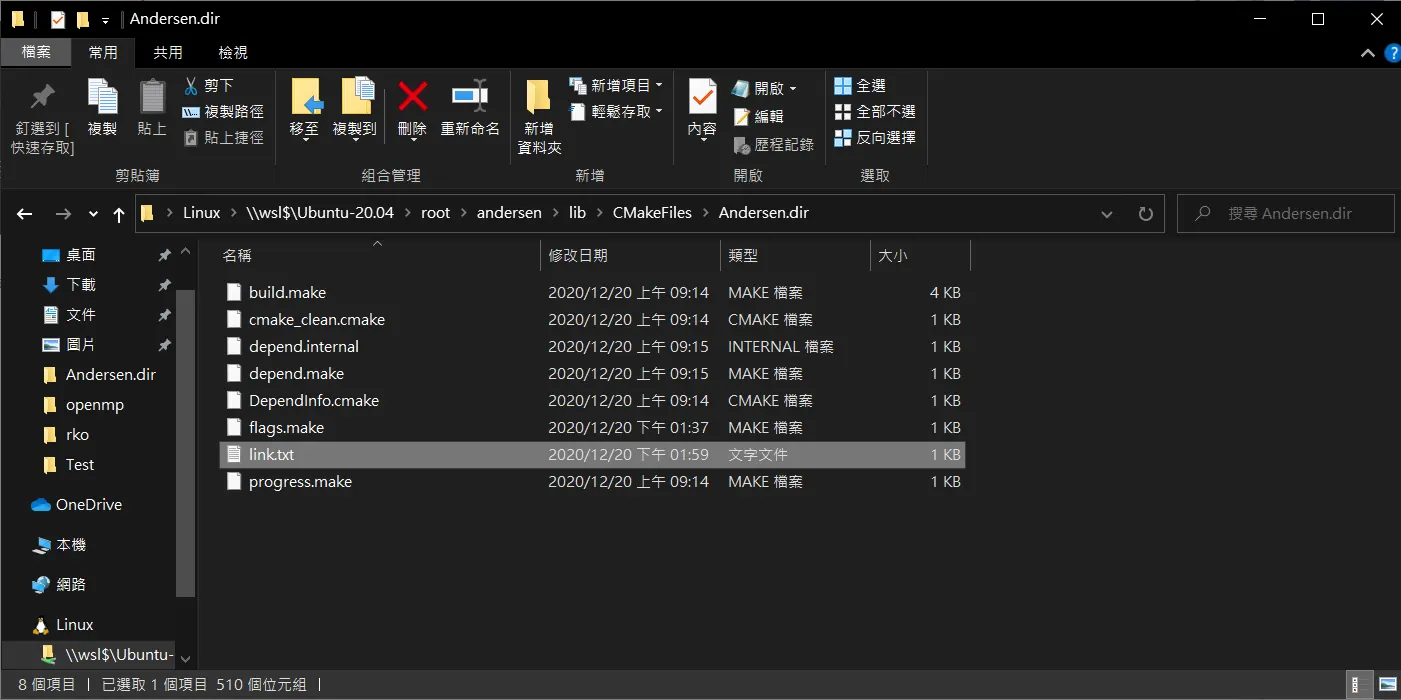
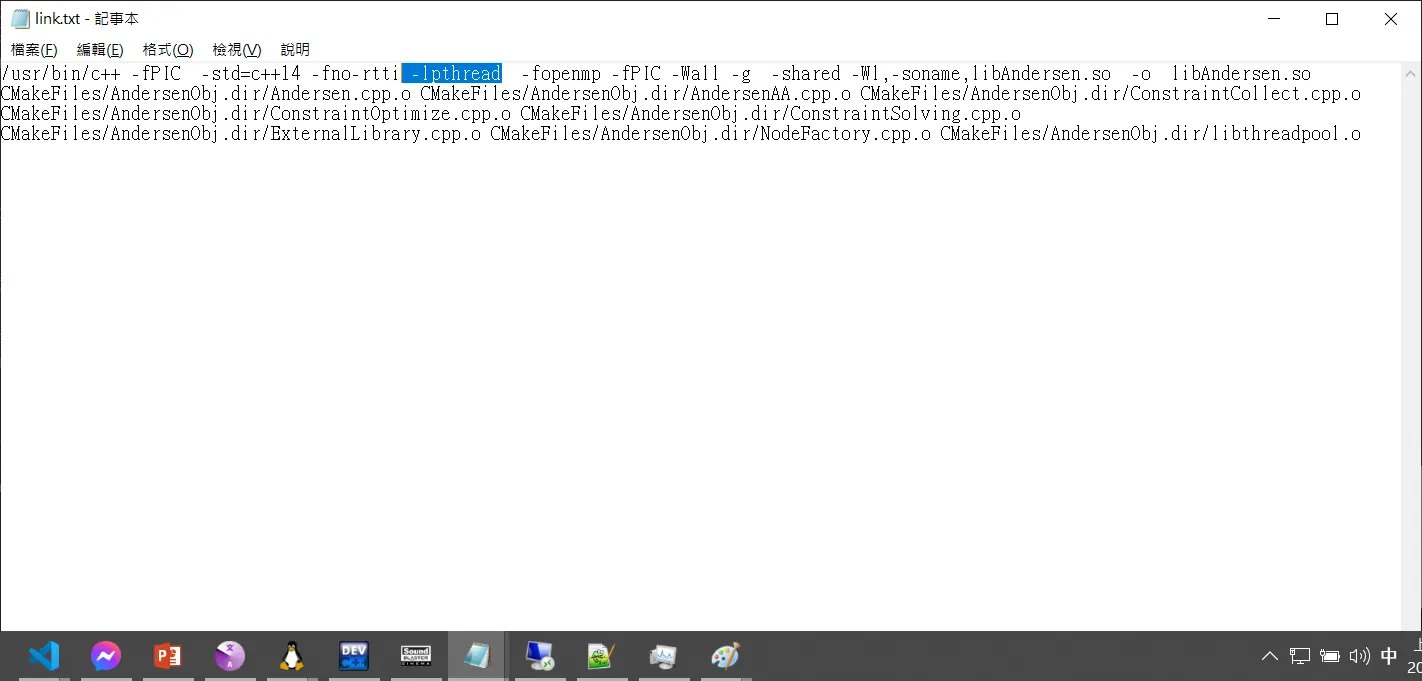 加入我們的 -lpthread
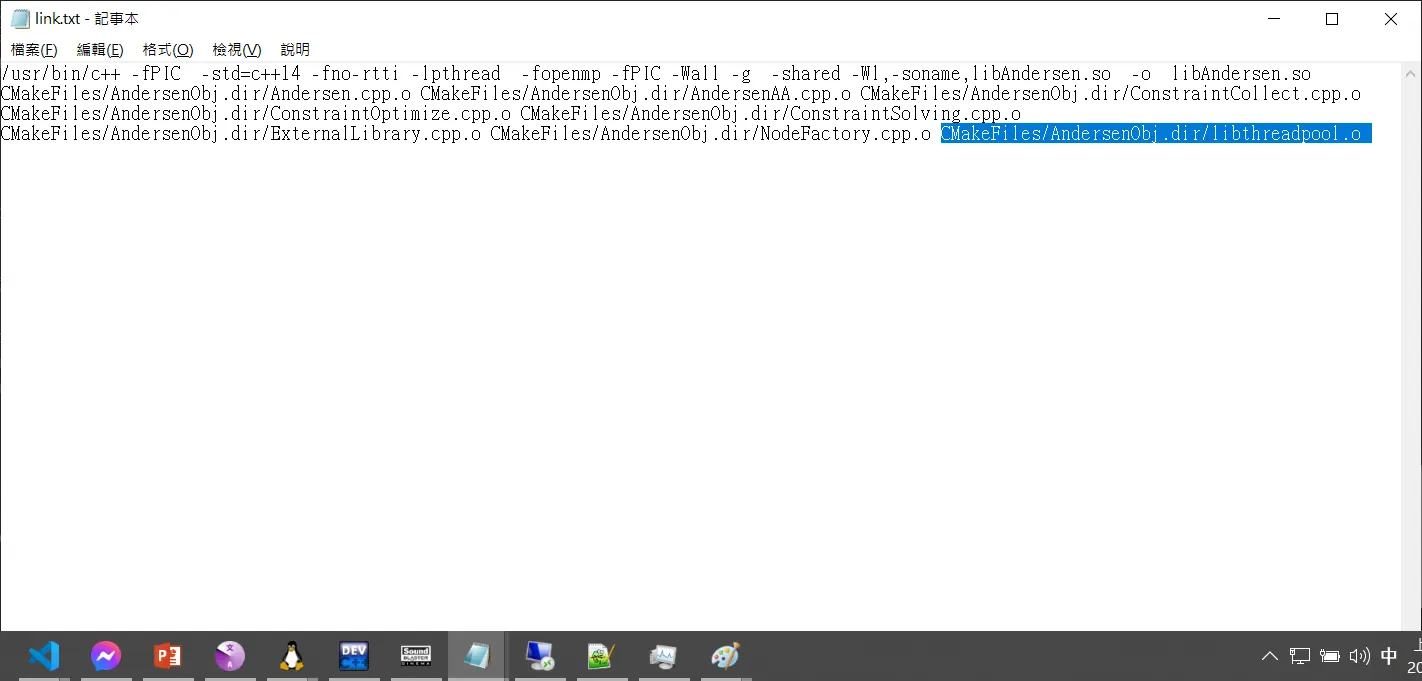
再把剛剛的 專案 make 完後的
libthreadpool.o
複製到
CMakeFiles/AndersenObj.dir/libthreadpool.o
回到目錄我們在 一開始的 ConstraintCollect.cpp
加入我們的 -lpthread
再把剛剛的 專案 make 完後的
libthreadpool.o
複製到
CMakeFiles/AndersenObj.dir/libthreadpool.o
回到目錄我們在 一開始的 ConstraintCollect.cpp
include 也不會在編譯完 找不到我們的 標頭檔了
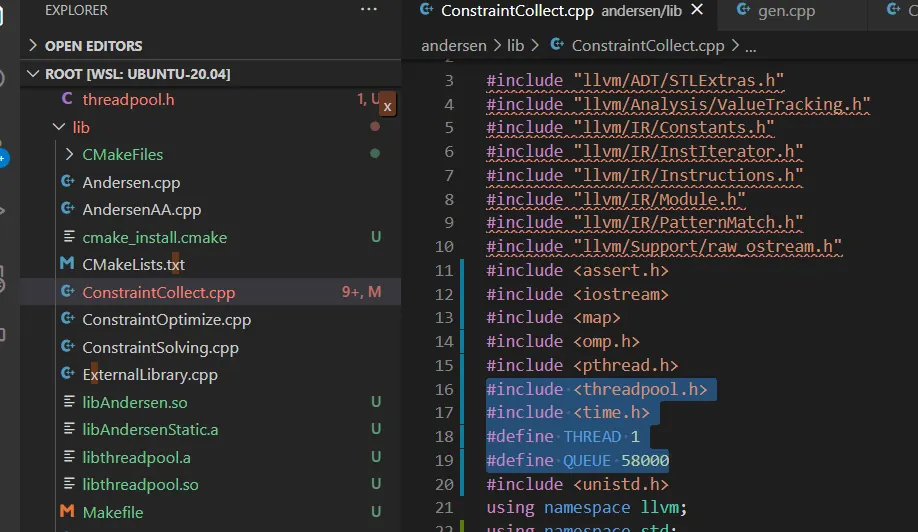
再往下面看我們蒐集約束的位置
    // Now, collect constraint for each relevant instruction
    //#pragma omp for schedule(static)
    for (const_inst_iterator itr = inst_begin(f), ite = inst_end(f); itr != ite;
         ++itr) {

      // fprintf(stderr, "%p\n", &inst);
      auto inst = &*itr.getInstructionIterator();
      threadpool_add(pool, &dummy_task, (Instruction *)inst, 0);
      pthread_mutex_lock(&lock);
      tasks++;
      pthread_mutex_unlock(&lock);

      // collectConstraintsForInstruction(inst);
    }
到這邊我們要來看一下dummy_task 這邊我對 arg 進行了強轉,沒有gdb 只能 printf 記憶體位置,如果指向 auto inst 和arg記憶體位置 一樣 有成功,很大機率就是成功了,記得一直強轉一下或許有機會
void dummy_task(void *arg) {

  (thistmp->collectConstraintsForInstruction)((Instruction *)arg);

}
這邊可以看到 thistmp 為什麼要用這個呢原因就是 要在 外部 function 去呼叫我們的 void Andersen:: class 裡面的 function,其實是不能的
void 不行呼叫 void Andersen:: function
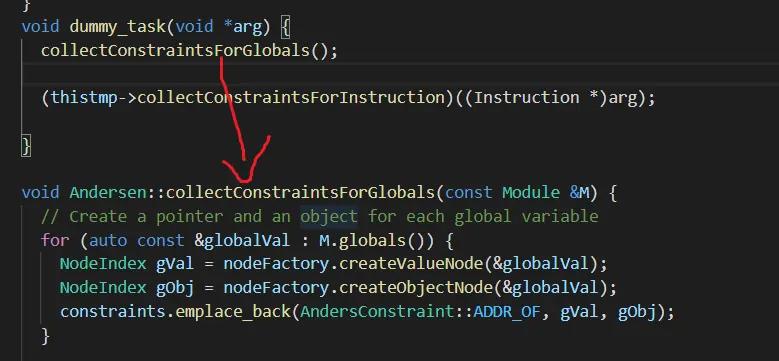 也就是這樣呼叫方式是不行的
所以我先預存 this 指標
也就是這樣呼叫方式是不行的
所以我先預存 this 指標
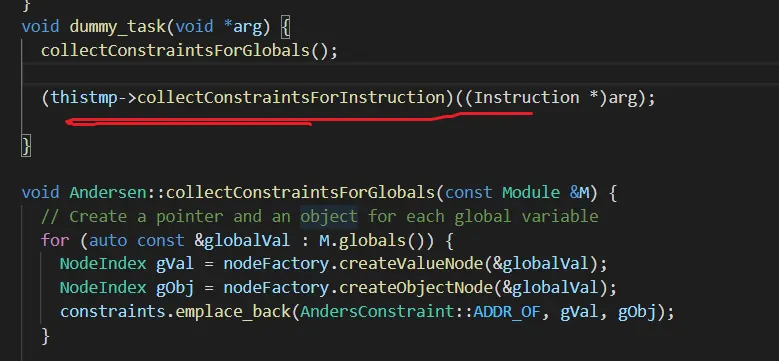 這樣就可以了
這邊用到了兩次指標,再來看我們的switch case 變得怎樣吧
那麼目前我們的 測資只有用到這些 case function
這樣就可以了
這邊用到了兩次指標,再來看我們的switch case 變得怎樣吧
那麼目前我們的 測資只有用到這些 case function
也就是說對應到原本的code
 switch (inst->getOpcode()) {
  case Instruction::Alloca: {
    NodeIndex valNode = nodeFactory.getValueNodeFor(inst);
    assert(valNode != AndersNodeFactory::InvalidIndex &&
           "Failed to find alloca value node");
    NodeIndex objNode = nodeFactory.createObjectNode(inst);
    constraints.emplace_back(AndersConstraint::ADDR_OF, valNode, objNode);
    break;
  }
  case Instruction::Call:
  case Instruction::Invoke: {
    ImmutableCallSite cs(inst);
    assert(cs && "Something wrong with callsite?");

    addConstraintForCall(cs);

    break;
  }
  case Instruction::Ret: {
    if (inst->getNumOperands() > 0 &&
        inst->getOperand(0)->getType()->isPointerTy()) {
      NodeIndex retIndex =
          nodeFactory.getReturnNodeFor(inst->getParent()->getParent());
      assert(retIndex != AndersNodeFactory::InvalidIndex &&
             "Failed to find return node");
      NodeIndex valIndex = nodeFactory.getValueNodeFor(inst->getOperand(0));
      assert(valIndex != AndersNodeFactory::InvalidIndex &&
             "Failed to find return value node");
      constraints.emplace_back(AndersConstraint::COPY, retIndex, valIndex);
    }
    break;
  }
  case Instruction::Load: {
    if (inst->getType()->isPointerTy()) {
      NodeIndex opIndex = nodeFactory.getValueNodeFor(inst->getOperand(0));
      assert(opIndex != AndersNodeFactory::InvalidIndex &&
             "Failed to find load operand node");
      NodeIndex valIndex = nodeFactory.getValueNodeFor(inst);
      assert(valIndex != AndersNodeFactory::InvalidIndex &&
             "Failed to find load value node");
      constraints.emplace_back(AndersConstraint::LOAD, valIndex, opIndex);
    }
    break;
  }
  case Instruction::Store: {
    if (inst->getOperand(0)->getType()->isPointerTy()) {
      NodeIndex srcIndex = nodeFactory.getValueNodeFor(inst->getOperand(0));
      assert(srcIndex != AndersNodeFactory::InvalidIndex &&
             "Failed to find store src node");
      NodeIndex dstIndex = nodeFactory.getValueNodeFor(inst->getOperand(1));
      assert(dstIndex != AndersNodeFactory::InvalidIndex &&
             "Failed to find store dst node");
      constraints.emplace_back(AndersConstraint::STORE, dstIndex, srcIndex);
    }
    break;
  }
void Andersen::instAlloca(const Instruction *inst) {

  NodeIndex valNode = nodeFactory.getValueNodeFor(inst);
  assert(valNode != AndersNodeFactory::InvalidIndex &&
         "Failed to find alloca value node");
  NodeIndex objNode = nodeFactory.createObjectNode(inst);
  constraints.emplace_back(AndersConstraint::ADDR_OF, valNode, objNode);
}
void Andersen::instInvoke(const Instruction *inst) {

  ImmutableCallSite cs(inst);
  assert(cs && "Something wrong with callsite?");
  addConstraintForCall(cs);
}
void Andersen::instRet(const Instruction *inst) {

  if (inst->getNumOperands() > 0 &&
      inst->getOperand(0)->getType()->isPointerTy()) {
    NodeIndex retIndex =
        nodeFactory.getReturnNodeFor(inst->getParent()->getParent());
    assert(retIndex != AndersNodeFactory::InvalidIndex &&
           "Failed to find return node");
    NodeIndex valIndex = nodeFactory.getValueNodeFor(inst->getOperand(0));
    assert(valIndex != AndersNodeFactory::InvalidIndex &&
           "Failed to find return value node");
    constraints.emplace_back(AndersConstraint::COPY, retIndex, valIndex);
  }
}
void Andersen::instLoad(const Instruction *inst) {

  if (inst->getType()->isPointerTy()) {
    NodeIndex opIndex = nodeFactory.getValueNodeFor(inst->getOperand(0));
    assert(opIndex != AndersNodeFactory::InvalidIndex &&
           "Failed to find load operand node");
    NodeIndex valIndex = nodeFactory.getValueNodeFor(inst);
    assert(valIndex != AndersNodeFactory::InvalidIndex &&
           "Failed to find load value node");
    constraints.emplace_back(AndersConstraint::LOAD, valIndex, opIndex);
  }
}
void Andersen::instStore(const Instruction *inst) {

  if (inst->getOperand(0)->getType()->isPointerTy()) {
    NodeIndex srcIndex = nodeFactory.getValueNodeFor(inst->getOperand(0));
    assert(srcIndex != AndersNodeFactory::InvalidIndex &&
           "Failed to find store src node");
    NodeIndex dstIndex = nodeFactory.getValueNodeFor(inst->getOperand(1));
    assert(dstIndex != AndersNodeFactory::InvalidIndex &&
           "Failed to find store dst node");
    constraints.emplace_back(AndersConstraint::STORE, dstIndex, srcIndex);
  }
}
這邊可以看到我先把 case 裡面的東西給 獨立出來成一個 function 當switch case 條件成真的時候 我把我當時的 this Andersen::instAlloca; function 指標給指給 fptr 再來我把 inst 當key fptr 當 value 並加上鎖
pthread_mutex_lock(&lock); pthread_mutex_unlock(&lock);
 switch (inst->getOpcode()) {

  case Instruction::Alloca: {
    //  Andersen *p =this;
    // cout << "Alloca" <<endl;
    // cout << "fuck123" <<endl;
    pthread_mutex_lock(&lock);

    fptr f = &Andersen::instAlloca;
    mymap2[inst] = f;
    done++;
    pthread_mutex_unlock(&lock);
    // Andersen xobject;
    // (this->*f)(inst);
    //
    //(this)->f(inst);
    // instAlloca(inst);
    break;
  }
  case Instruction::Call:
  case Instruction::Invoke: {
    pthread_mutex_lock(&lock);
    fptr f = &Andersen::instInvoke;

    //  (this->*f)(inst);
    mymap2[inst] = f;
    done++;
    pthread_mutex_unlock(&lock);
    //   cout << "fuck" <<endl;
    // fptr f = instInvoke;
    // f(inst);

    break;
  }
  case Instruction::Ret: {
    pthread_mutex_lock(&lock);
    fptr f = &Andersen::instRet;
    //  (this->*f)(inst);
    mymap2[inst] = f;
    done++;
    pthread_mutex_unlock(&lock);
    //  cout << "fuck2" <<endl;
    // fptr f = instRet;
    // f(inst);

    break;
  }
  case Instruction::Load: {
    pthread_mutex_lock(&lock);
    fptr f = &Andersen::instLoad;
    //  (this->*f)(inst);
    mymap2[inst] = f;
    done++;
    pthread_mutex_unlock(&lock);
    //  cout << "fuck3" <<endl;
    // fptr f = instLoad;
    // f(inst);
    // instLoad(inst);
    break;
  }
  case Instruction::Store: {
    pthread_mutex_lock(&lock);
    //   cout << "fuck4" <<endl;
    fptr f = &Andersen::instStore;
    mymap2[inst] = f;
    done++;
    pthread_mutex_unlock(&lock);
    //  (this->*f)(inst);

    // fptr f = instStore;
    //  f(inst);
    // instStore(inst);
    break;
  }
  }
到這邊產生任務已經完成了
如何完成一個任務呢
fprintf(stderr, "Added %d tasks\n", tasks);

  /* 不断检查任务数是否完成一半以上,没有则继续休眠 */
  while (done != tasks) {
    // fprintf(stderr, "Did %d tasks\n", done);
    // usleep(1);
  }
  fprintf(stderr, "Did %d tasks\n", done);
  /* 这时候销毁线程池,0 代表 immediate_shutdown */

  assert(threadpool_destroy(pool, 0) == 0);
  int k = 0;
  for (auto const &f : M) {
    if (f.isDeclaration() || f.isIntrinsic())
      continue;
    for (const_inst_iterator itr = inst_begin(f), ite = inst_end(f); itr != ite;
         ++itr) {
      k++;

      auto inst = &*itr.getInstructionIterator();
      // fprintf(stderr, "%p\n", &inst);
        去找我的 key 和 value
      fptr f = mymap2.find((Instruction *)inst)->second;
      ;
      (this->*f)(inst);
      // fprintf(stderr, "%d\n", k);
      // mymap2[inst] = f;
      // collectConstraintsForInstruction(inst);
    }
  }
因為順序性問題
我透過
去找我的 key 和 value
fptr f = mymap2.find((Instruction *)inst)->second;
(this->*f)(inst);
最後實作完成的時候發現的bug 就是
thread 為1個的時候很正常
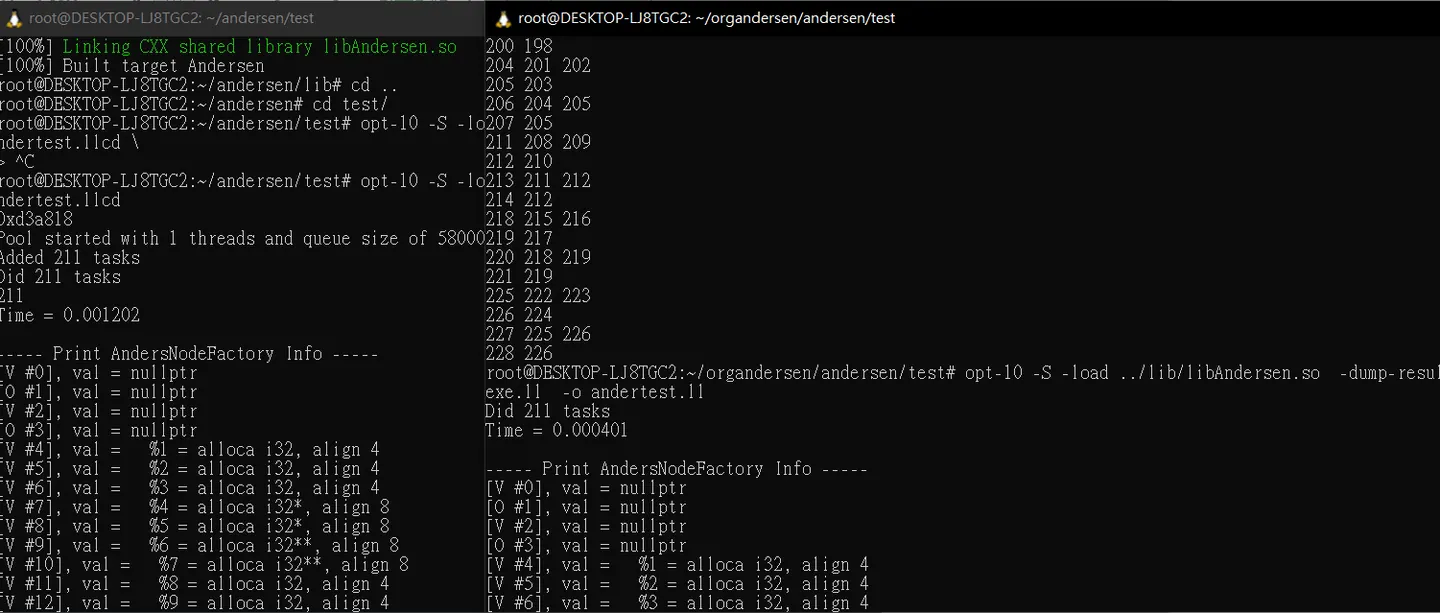
左邊是我的版本,有加上那麼多 thread 很正常 也就是說 我額外寫了一個 產生程式碼的工具
#include <iostream>
#include <omp.h>
using namespace std;
/* run this program using the console pauser or add your own getch, system("pause") or input loop */
#include <stdio.h>
#include <stdlib.h>
#include <vector>
#include <fstream>

int main()
{
    ofstream myfile ("exampletest.c");
    int i = 0;
     if (myfile.is_open())   {
     myfile << "int main (){\n";
    for (int i =0 ; i <15; i++){

    //myfile << "inline  void test"<<i<<"()"<<"{ int *i"<<i<<"; i"<<i<<"=malloc(sizeof (int)*1); free(i"<<i<<"); }\n";
//  myfile<<"inline  void test"<<i<<"()" <<"{ int i, j, k;  int *a = &i;          int *b = &k;           a = &j;            int **p = &a;           int **q = &b;           p = q;           int *c = *q; if(a>0)  q=p; else a=&k; }\n";
//myfile << "test"<<i<<"();\n";
    //myfile <<"int i, j, k;\nint *a = &i;\nint *b = &k;\na = &j;\nint **p = &a;\nint **q = &b;\np = q;\n ";
    myfile <<"int i"<<i<<", j"<<i<<", k"<<i<<";\nint *a"<<i<<" = &i"<<i<<";\nint *b"<<i<<" = &k"<<i<<";\na"<<i<<" = &j"<<i<<";\nint **p"<<i<<" = &a"<<i<<";\nint **q"<<i<<" = &b"<<i<<";\np"<<i<<" = q"<<i<<";\n ";
    }
         myfile << "}\n";
    myfile.close();
    }
    else cout << "Unable to open file";

}
可以輸出成一個exampletest.c 檔案
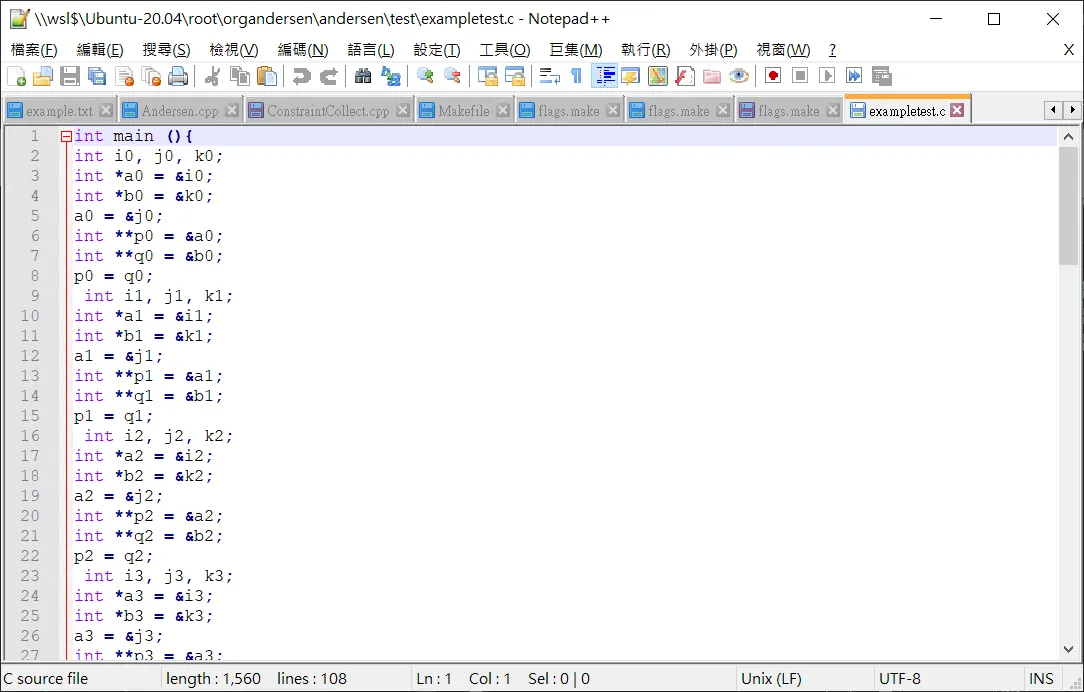
vim gen.cpp
g++ gen.cpp  -o gen
./gen
clang -S -emit-llvm exampletest.c -o testexe.ll

opt-10 -S -load ../lib/libAndersen.so -dump-result  -anders-aa  ./testexe.ll  -o andertest.ll
真實環境我是不知道有沒有這麼多指標互指,大專案應該是有
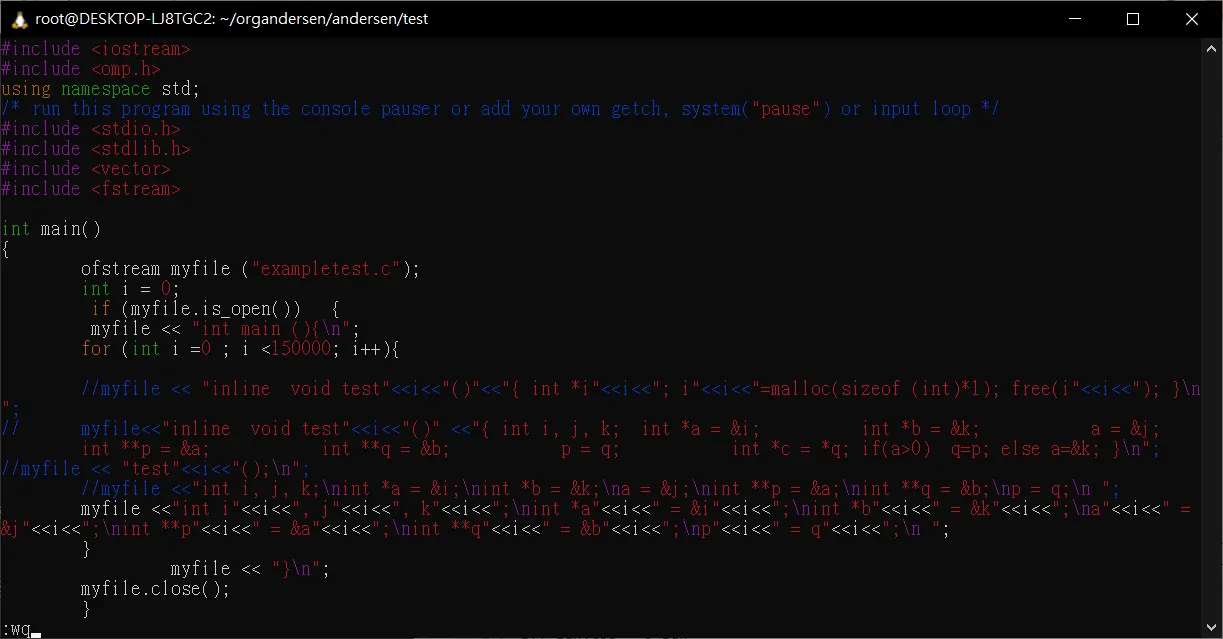
那麼我產生了150000 次 得到了程式碼數量快兩百萬行的程式碼
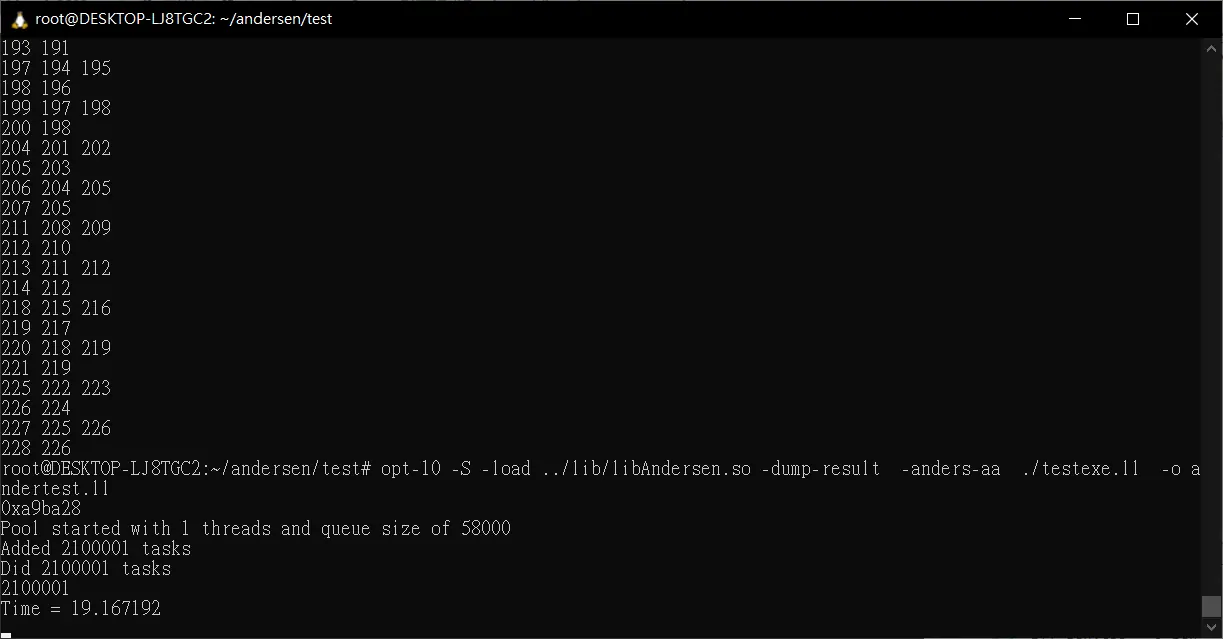
這邊時間 以2000001行來測試,這邊時間比較偏向於一開始蒐集的位置
可以知道蒐集約束這邊應該不是瓶頸,或許是後面的fucntion
void collectConstraints(const llvm::Module &);
void optimizeConstraints(); <====
void solveConstraints(); <===
其實在分析專案前已經看過了,那邊也是在做類似的事情,也就是程式碼在其他 function 的時候走訪fucntion return 等等,不是在 main function
thread pool 單執行緒版本 30s
 原版 23s
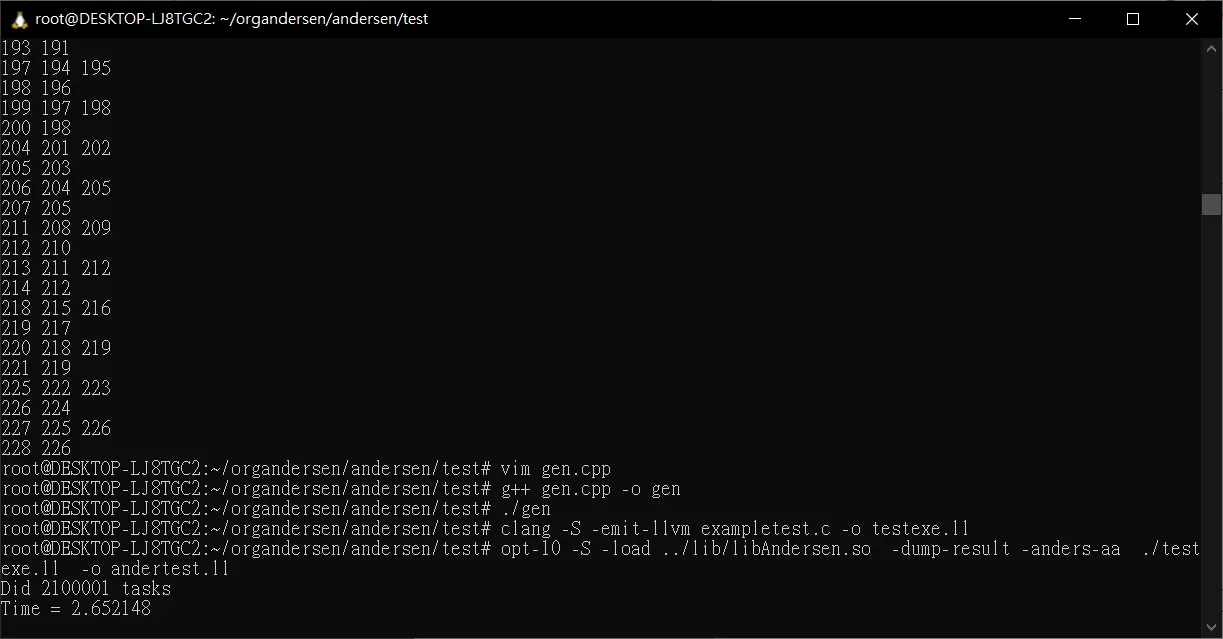
可以看到為什麼我在這邊 還是單執行緒在程式碼量小的時候還可以多開thread 去處理可能要自己調task pool 和 thread 數量,也就是前面我說的為什麼有bug,太多 thread 搶著要mymap2 那這個地方又有加鎖,所以程式會被整個 lock 住
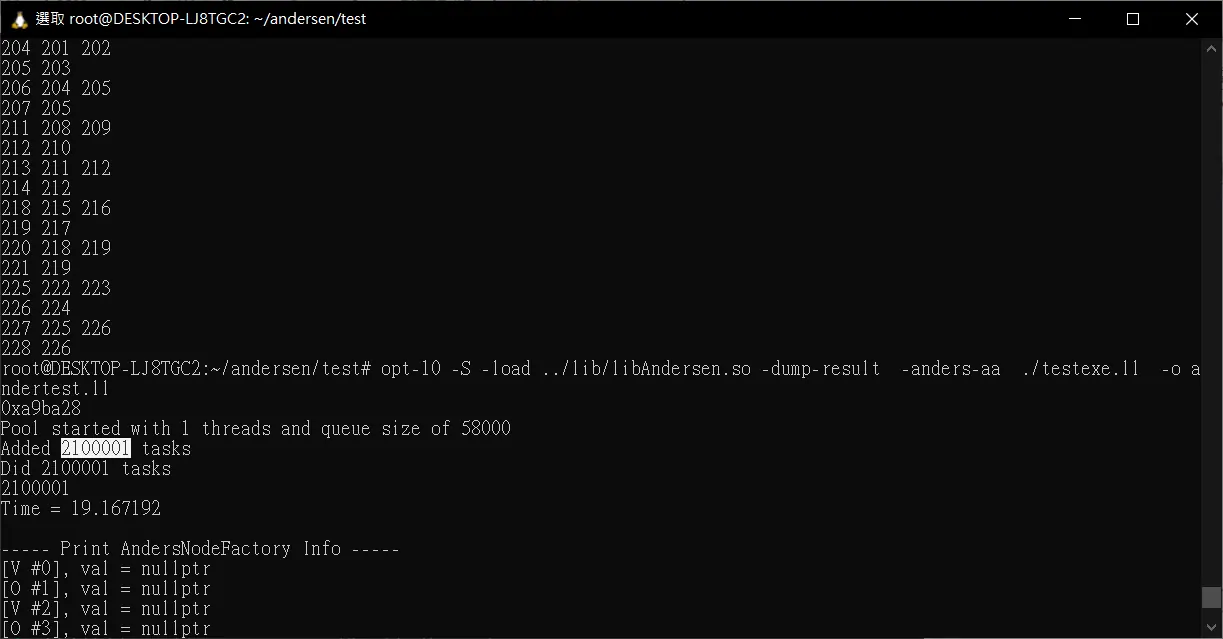
結論就是 單一thread thread pool lose 多多少少 pthread_mutex_lock(&lock); 會影響
Original win
多 thread
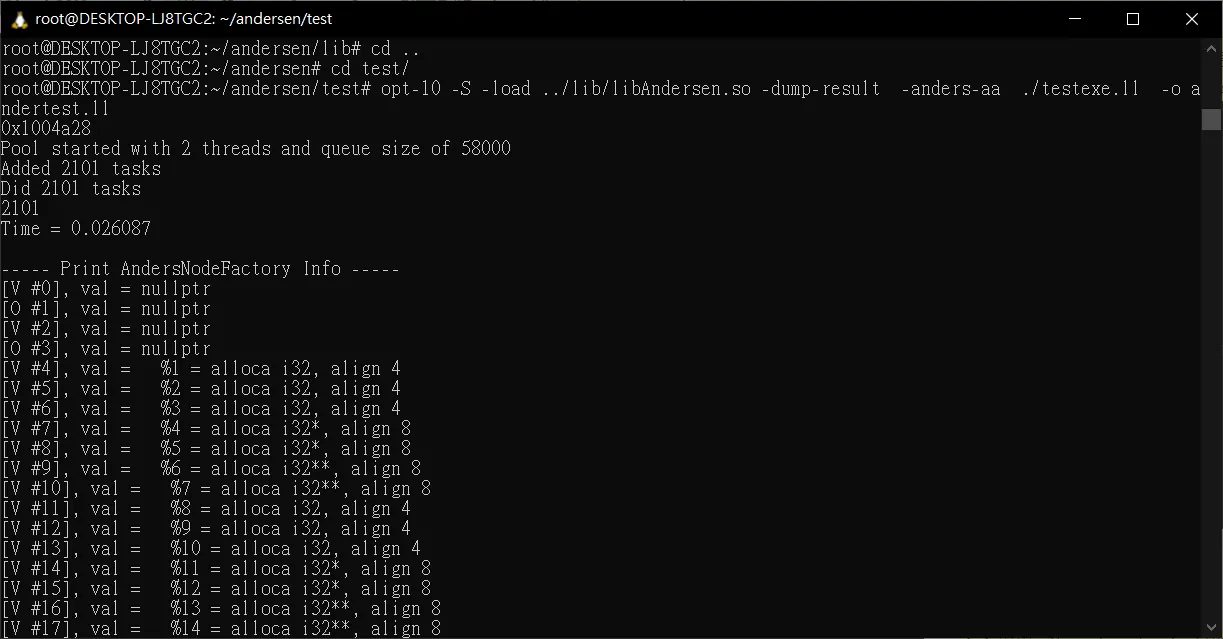
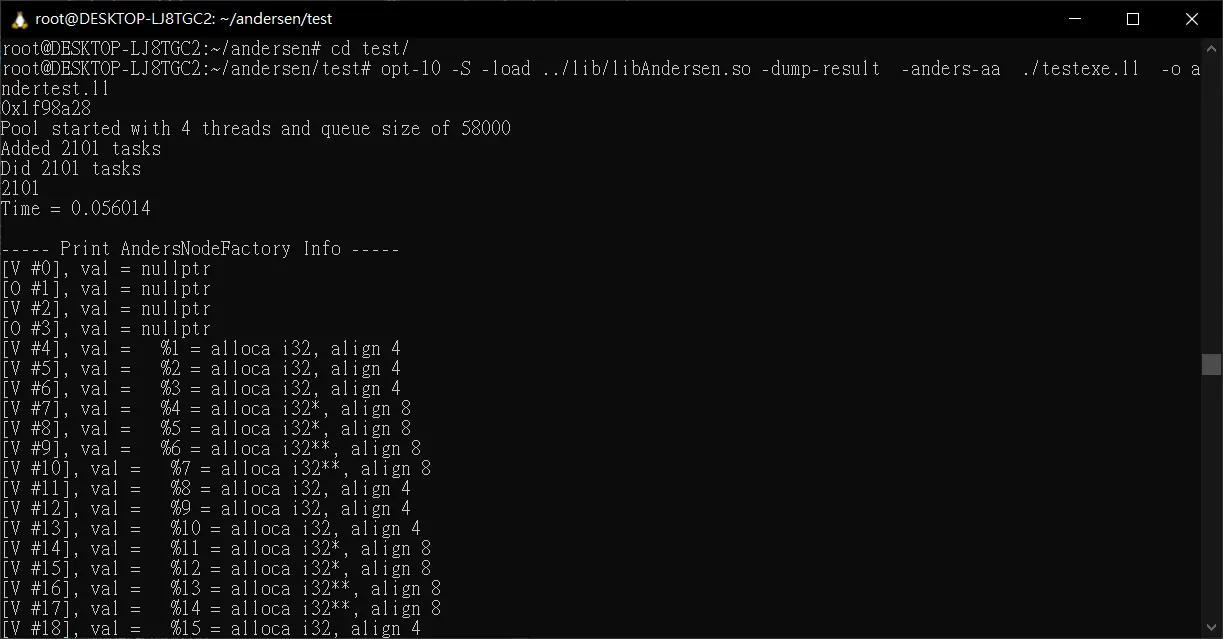
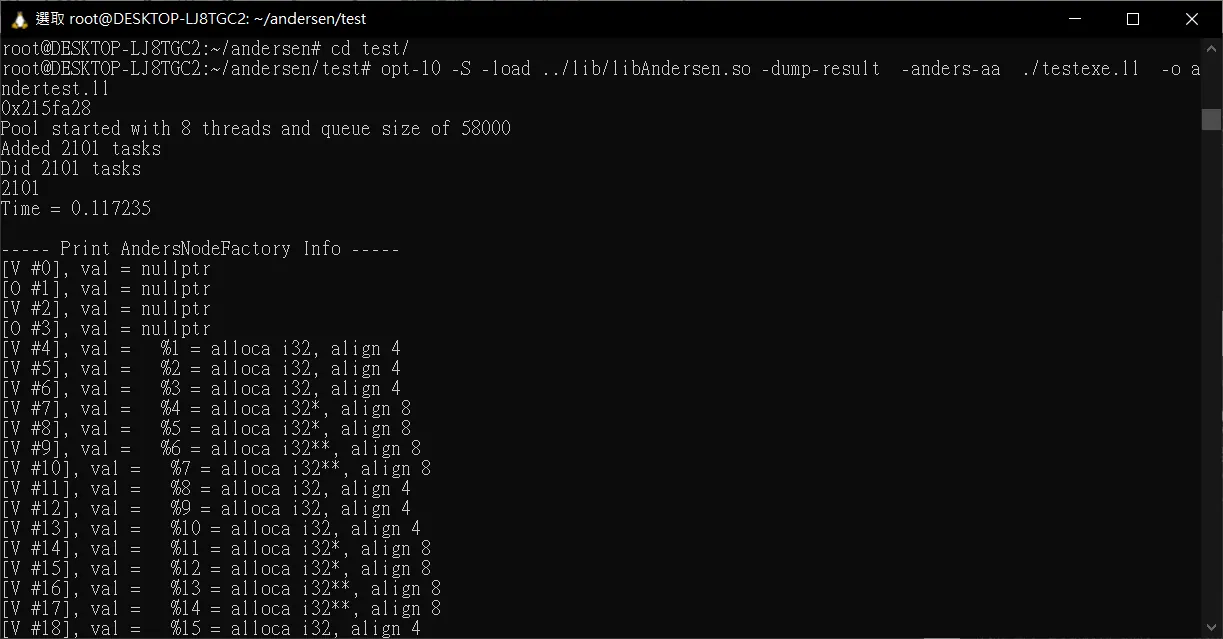
thread pool lose 程式碼量大的話 Original win
thread pool版本都會小輸幾秒,應該就是最大的瓶頸就在存取我們的mymap2
這部分。
2thread
 4thread
8thread

Comments