

golang channel
以下列例子假設 pump 為生產者, suck 為消費者,假設消費者 先執行的話則有可能 會阻塞,
所以預設buffer 為2的情況下,可以看到我們可以在suck function 透過按下 enter passue 繼續執行
可以看到buffer 永遠會先有值,則 suck 不會發生阻塞,
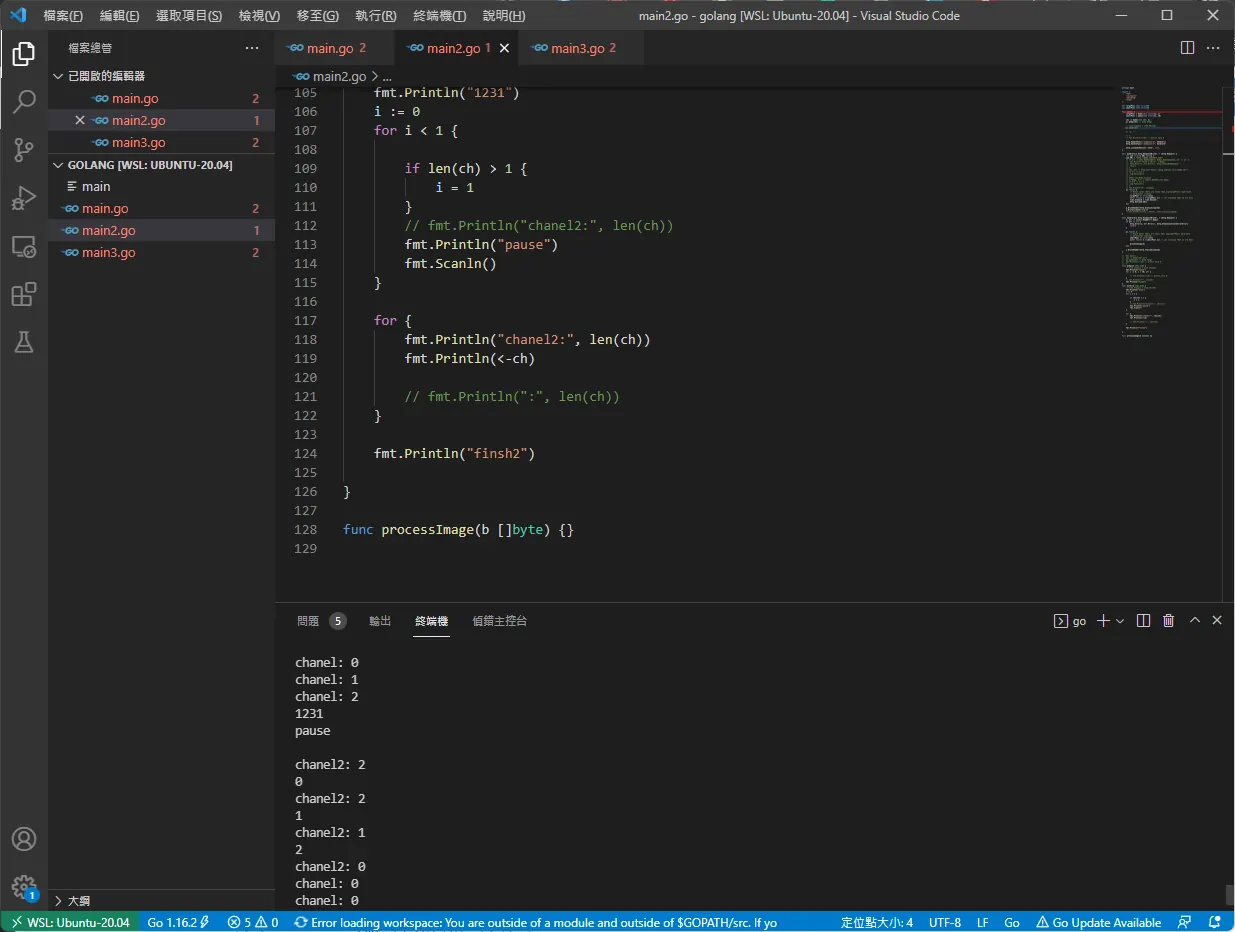 這樣我們的程式就不會阻塞,可以嘗試更改 buffer 為1 or 0 則有可能出現suck 嘗試讀取卻發現buffer 沒有值,則發生死鎖,因為按下enter 的當下suck 先執行發現沒人傳送則阻塞,再換pump 假設又發現沒人接收 則阻塞
1)對於同一個通道,發送操作(協程或者函式中的),在接收者準備好之前是阻塞的:如果ch中的數據無 人接收,就無法再給通道傳入其他數據:新的輸入無法在通道非空的情況下傳入。所以發送操作會等待 ch 再次變為可用狀態:就是通道值被接收時(可以傳入變數)。
2)對於同一個通道,接收操作是阻塞的(協程或函式中的),直到發送者可用:如果通道中沒有數據,接 收者就阻塞了。
func main() {
    ch1 := make(chan int, 2)
    go pump(ch1) // pump hangs
    // time.Sleep(1 * time.Second)
    go suck(ch1)
    http.ListenAndServe(":8080", nil)
}
func pump(ch chan int) {
    // time.Sleep(1 * time.Second)
    fmt.Println("12312")
    for i := 0; i < 10; i++ {

        ch <- i
        fmt.Println("chanel:", len(ch))

    }

    fmt.Println("finsh")
}
func suck(ch chan int) {
    // time.Sleep(1 * time.Second)
    fmt.Println("1231")
    i := 0
    for i < 1 {

        if len(ch) > 1 {
            i = 1
        }

        fmt.Println("pause")
        fmt.Scanln()
    }

    for {
        fmt.Println("chanel2:", len(ch))
        fmt.Println(<-ch)

    }

    fmt.Println("finsh2")

}
有緩衝
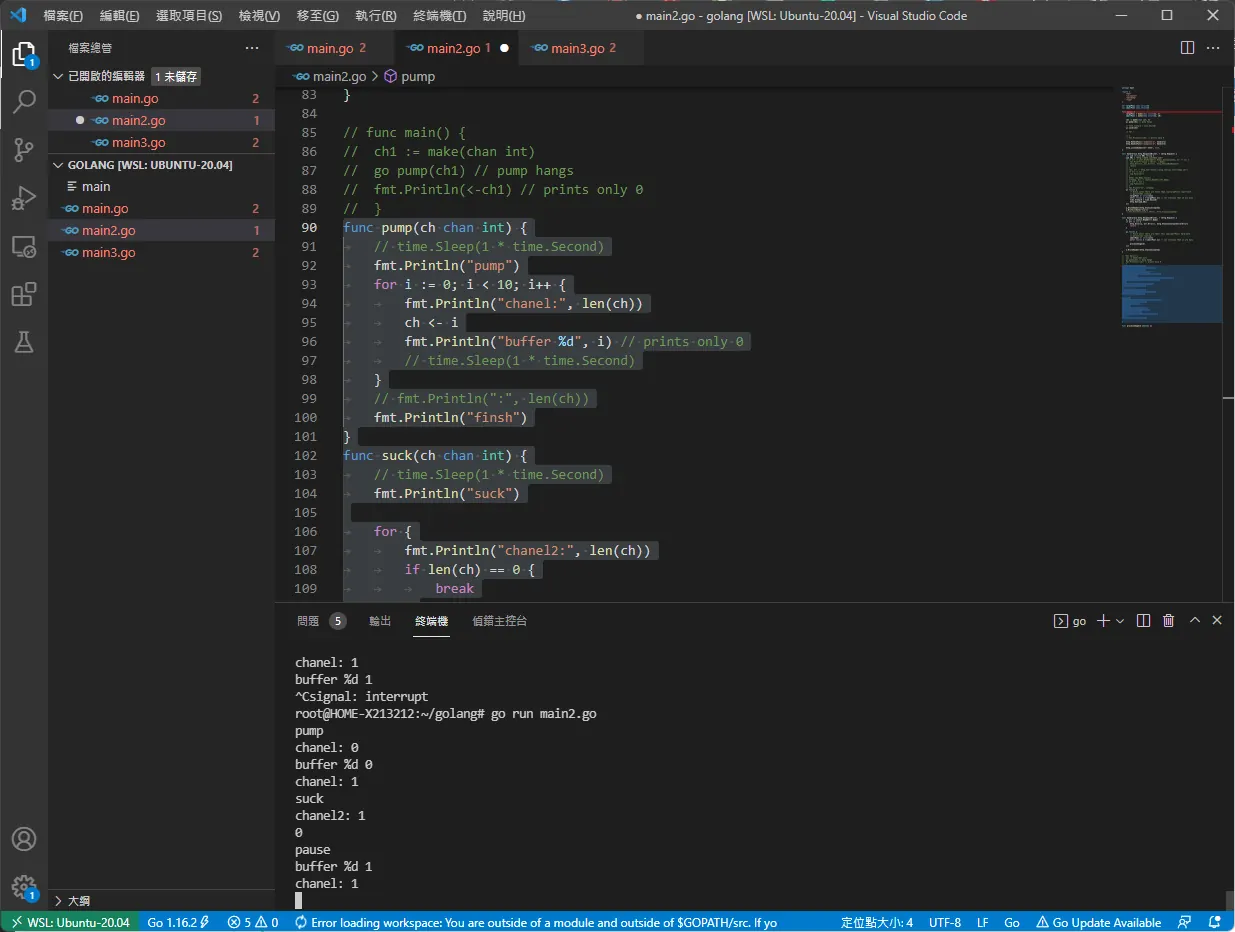
在緩衝區為1的情況下,buffer預存一個int,suck 則會一直讀到沒有緩衝 下一個就代表沒有資料並結束goroutine,沒有好好回收goroutine
func main (){
    ch1 := make(chan int, 1)
    go pump(ch1) // pump hangs

    // time.Sleep(2 * time.Second)
    go suck(ch1)

}
func pump(ch chan int) {
    // time.Sleep(1 * time.Second)
    fmt.Println("pump")
    for i := 0; i < 10; i++ {
        fmt.Println("chanel:", len(ch))
        ch <- i
        fmt.Println("buffer %d", i) // prints only 0
        // time.Sleep(1 * time.Second)
    }
    // fmt.Println(":", len(ch))
    fmt.Println("finsh")
}
func suck(ch chan int) {
    // time.Sleep(1 * time.Second)
    fmt.Println("suck")

    for {
        fmt.Println("chanel2:", len(ch))
        if len(ch) == 0 {
            break
        }
        fmt.Println(<-ch)
        fmt.Println("pause")
        fmt.Scanln()
        // fmt.Println(":", len(ch))
    }
    fmt.Println("finsh2")

}
監控 gorutine
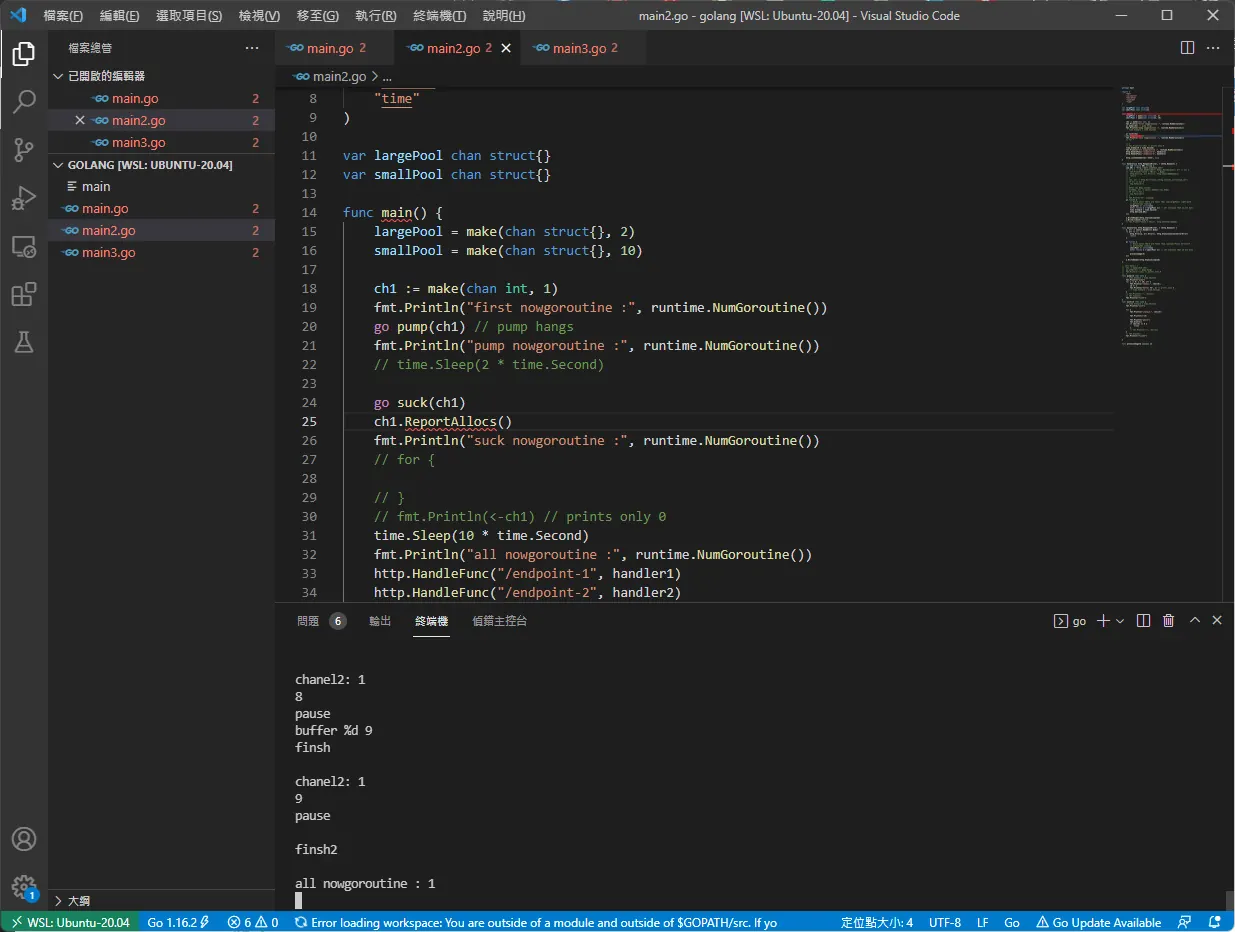
runtime.NumGoroutine() 其他profting https://studygolang.com/articles/14410 main function 可以延遲久一點 看最後存活的nowgoroutine 有幾個
func main() {
    largePool = make(chan struct{}, 2)
    smallPool = make(chan struct{}, 10)

    ch1 := make(chan int, 1)
    fmt.Println("first nowgoroutine :", runtime.NumGoroutine())
    go pump(ch1) // pump hangs
    fmt.Println("pump nowgoroutine :", runtime.NumGoroutine())
    // time.Sleep(2 * time.Second)

    go suck(ch1)
    fmt.Println("suck nowgoroutine :", runtime.NumGoroutine())
    // for {

    // }
    // fmt.Println(<-ch1) // prints only 0
    time.Sleep(10 * time.Second)
    fmt.Println("all nowgoroutine :", runtime.NumGoroutine())
}
func pump(ch chan int) {
    // time.Sleep(1 * time.Second)
    fmt.Println("pump")
    for i := 0; i < 10; i++ {
        fmt.Println("chanel:", len(ch))
        ch <- i
        fmt.Println("buffer %d", i) // prints only 0

    }

    fmt.Println("finsh")
}
func suck(ch chan int) {
    // time.Sleep(1 * time.Second)
    fmt.Println("suck")

    for {
        fmt.Println("chanel2:", len(ch))

        fmt.Println(<-ch)

        fmt.Println("pause")
        fmt.Scanln()
        if len(ch) == 0 {
            break
        }

    }

    fmt.Println("finsh2")

}
好的程式設計應該可以讓程式最後結束 gorutine 為可控,不像可控thread 可能會有 resource leak的問題
WaitGroup
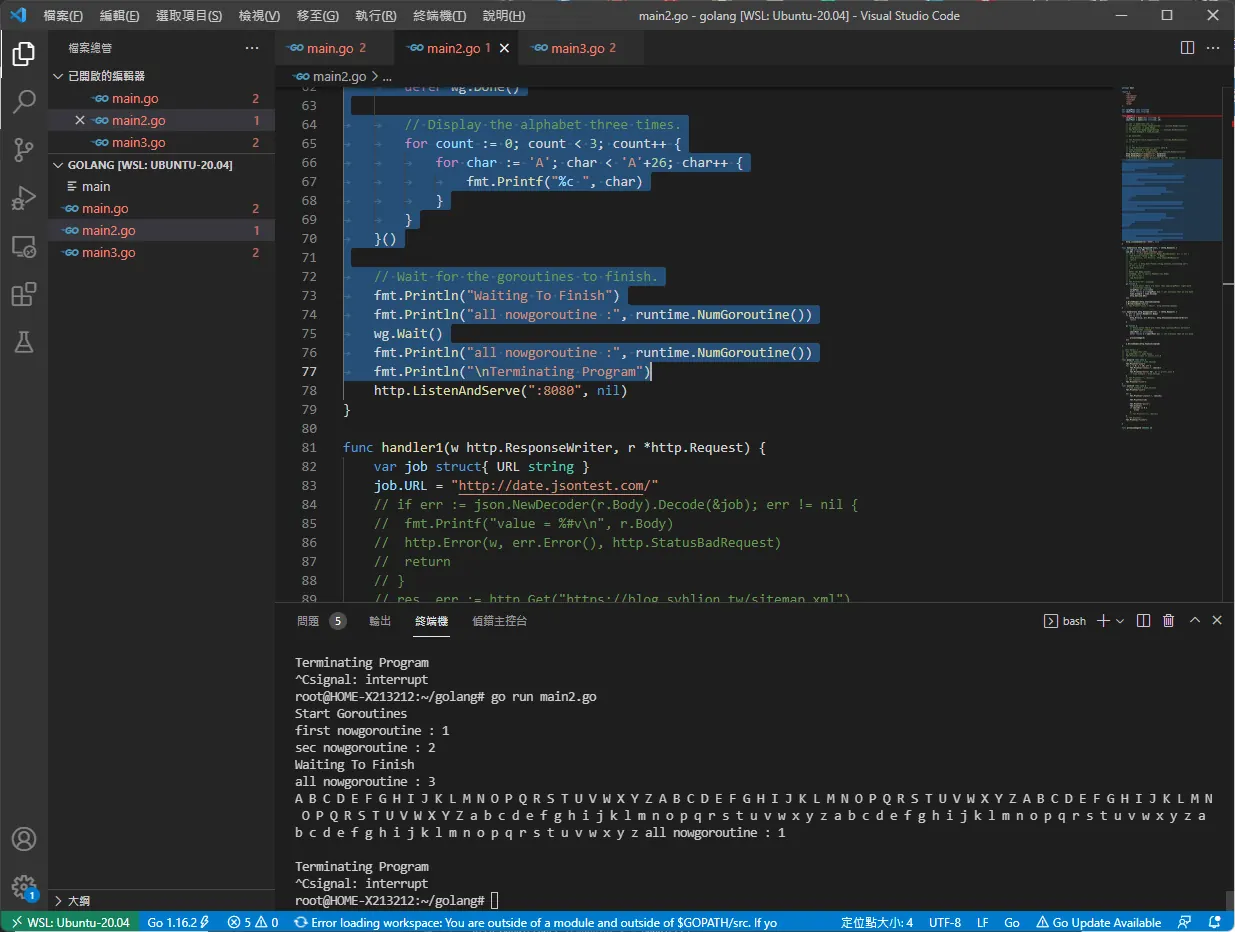
這邊有點像操作系統 切換 process or thread,單核心要切換 process or thread 則還是在同一個核心上
假設有多核心則可以看到process or thread 可以同時run 再多核心上實現平行。
runtime.GOMAXPROCS(1)
 runtime.GOMAXPROCS(2)
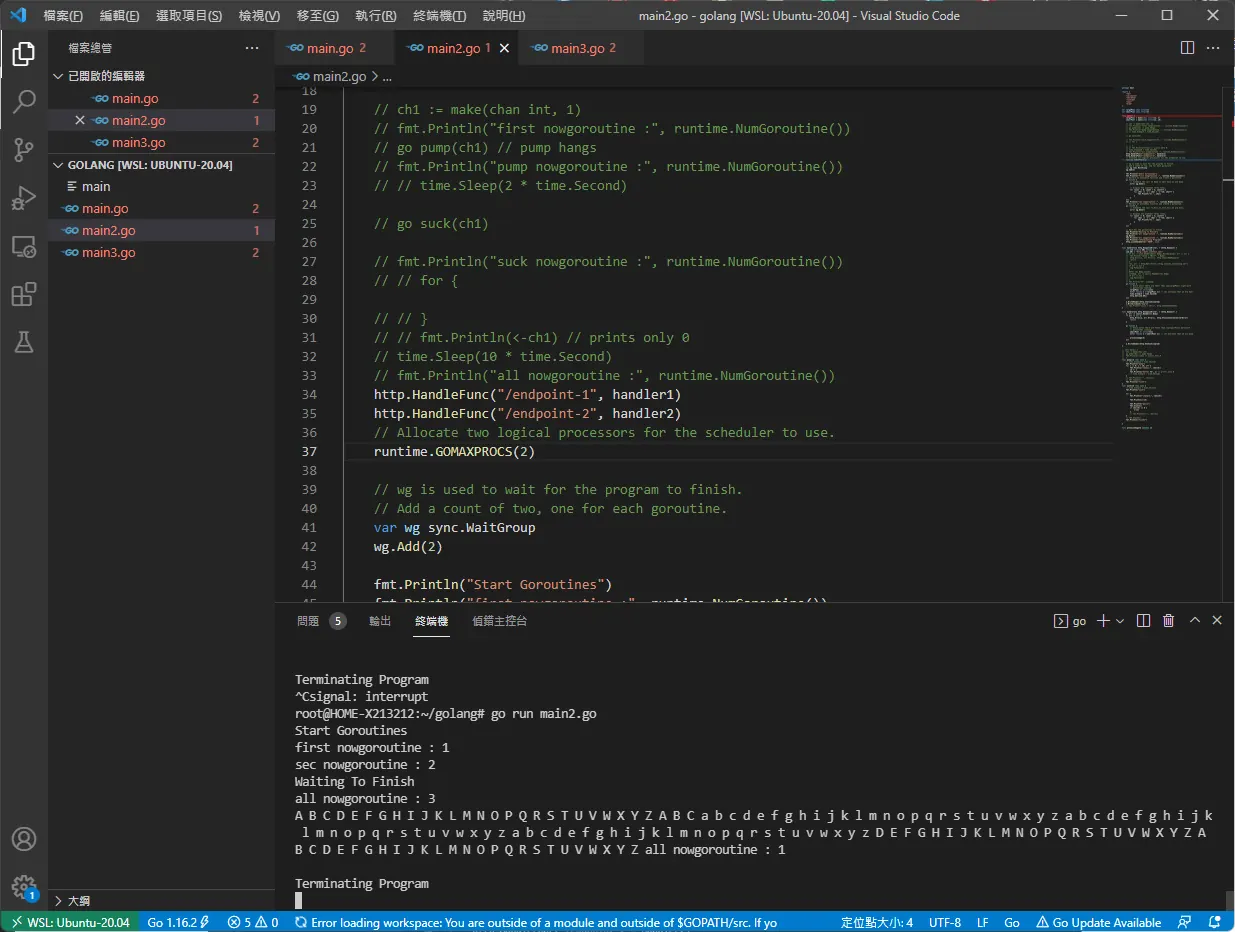
func main(){
    runtime.GOMAXPROCS(1)

    // wg is used to wait for the program to finish.
    // Add a count of two, one for each goroutine.
    var wg sync.WaitGroup
    wg.Add(2)

    fmt.Println("Start Goroutines")
    fmt.Println("first nowgoroutine :", runtime.NumGoroutine())
    // Declare an anonymous function and create a goroutine.
    go func() {
        // Schedule the call to Done to tell main we are done.
        defer wg.Done()

        // Display the alphabet three times.
        for count := 0; count < 3; count++ {
            for char := 'a'; char < 'a'+26; char++ {
                fmt.Printf("%c ", char)
            }
        }
    }()
    fmt.Println("sec nowgoroutine :", runtime.NumGoroutine())
    // Declare an anonymous function and create a goroutine.
    go func() {
        // Schedule the call to Done to tell main we are done.
        defer wg.Done()

        // Display the alphabet three times.
        for count := 0; count < 3; count++ {
            for char := 'A'; char < 'A'+26; char++ {
                fmt.Printf("%c ", char)
            }
        }
    }()

    // Wait for the goroutines to finish.
    fmt.Println("Waiting To Finish")
    fmt.Println("all nowgoroutine :", runtime.NumGoroutine())
    wg.Wait()
    fmt.Println("all nowgoroutine :", runtime.NumGoroutine())
    fmt.Println("\nTerminating Program")

}
Comments